

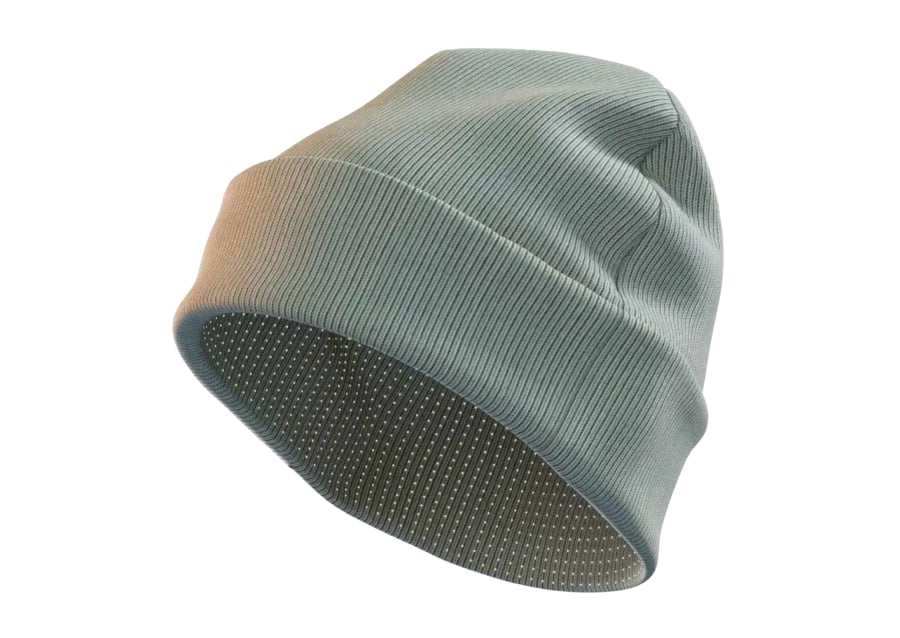
A Silicon Valley startup has made headlines with the introduction of a revolutionary brain-reading wearable that allows users to convert their thoughts into text without the need for speech or physical interaction with the device.
The company, known as Sabi, is pioneering a noninvasive brain-computer interface (BCI) that utilizes sensors embedded within a beanie to decode internal speech patterns. This innovation presents a significant advancement over traditional methods that involve implanted chips, thus potentially making the technology more accessible to a broader audience.
A Wearable Alternative to Implanted Brain Chips
According to reports, Sabi’s device employs electroencephalography (EEG) to capture electrical signals from the brain through the scalp. This approach eliminates the need for surgical procedures, allowing for easier scalability and adoption among users.
The beanie is equipped with an impressive range of between 70,000 and 100,000 sensors, which is significantly higher than what is typically found in conventional EEG systems. This multitude of sensors enhances the accuracy of signal detection, even amidst interference caused by bone and tissue. Initial versions of the device aim to achieve the translation of internal speech into text at approximately 30 words per minute, with performance improvements expected as users become more accustomed to the technology.
Investor Vinod Khosla remarked on the potential of this technology, stating, "The biggest and baddest application of BCI is if you can talk to your computer by thinking about it." This sentiment highlights the transformative possibilities that brain-computer interfaces hold for human-computer interaction.
The avoidance of surgical implants may also enhance the practicality of wearable BCIs, making them suitable for mainstream users who might be hesitant about more invasive options.
AI Models Trained on Brain Data
Despite the promise of such technology, decoding thoughts into actionable commands remains a complex challenge. Individual brain signals can vary significantly and may change based on focus and fatigue, complicating consistent interpretation.
To tackle this issue, Sabi is developing what it calls a "brain foundation model" that is trained on extensive neural data. Reports indicate that the company has amassed around 100,000 hours of brain recordings from volunteers, which will be used to refine and train the system.
Sabi’s official platform outlines a comprehensive multi-step approach that integrates custom neuroimaging sensors, large-scale brain data collection, and AI models designed to correlate brain signals with intended speech patterns.
While the device is still under development, there are indications that it could see a launch by the end of the year.
Privacy, Usability, and Adoption Challenges
Despite the exciting potential, several hurdles must be addressed before consumer adoption can become widespread. Experts emphasize that brain-computer interfaces need to be reliable and user-friendly, functioning without complex setups.
Neurotechnology consultant JoJo Platt stressed the necessity for ease of use, asserting, "They’re going to have to be ready to go out of the box." This highlights the importance of creating a seamless user experience to encourage adoption.
Privacy concerns also loom large, as neural data is highly sensitive and its misuse could expose deeply personal information about users. Addressing these privacy issues will be critical for the acceptance of wearable brain-computer platforms.
If Sabi can successfully navigate these challenges, their innovative beanie could pave the way for smoother, hands-free computing experiences in the future.
Source: eWEEK News