

















how to apply for ration card
Step-by-step guide on how to apply for ration card in India online or offline, including eligibility, documents, fees, and tips for 2025. Access food subsidies easily with this complete process.

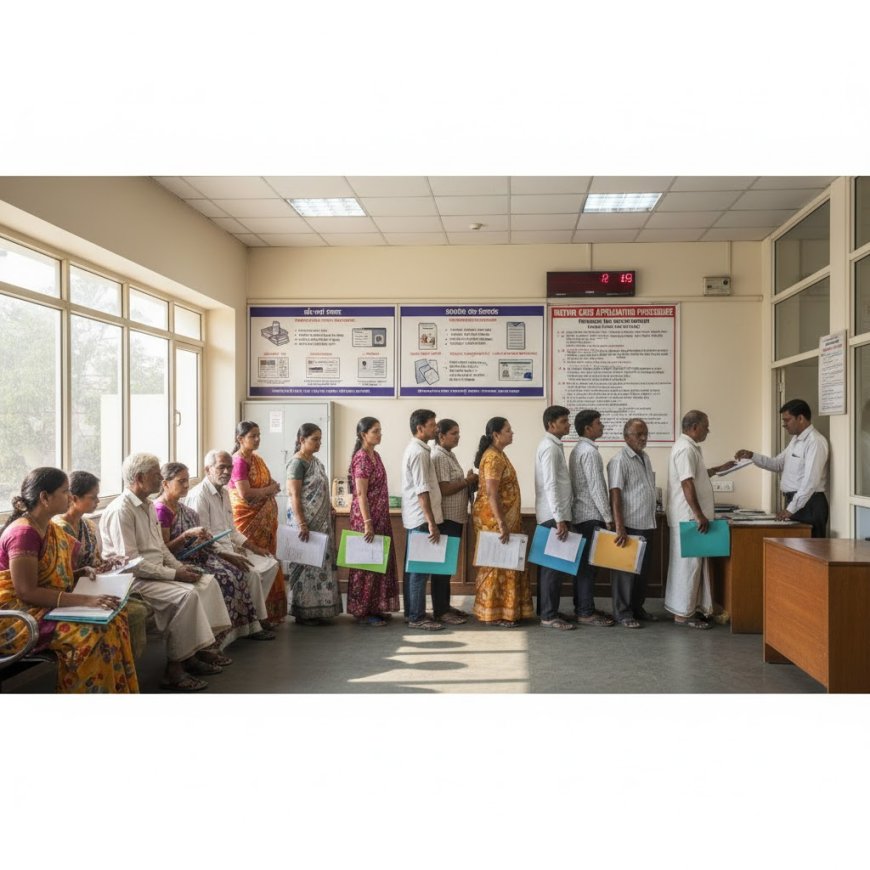
Aration cardis a vital document in India, serving as both an identity proof and a gateway to subsidized food, fuel, and other essentials under the Public Distribution System (PDS). Issued by state governments, it benefits over 800 million people through 5.5 lakh fair price shops, ensuring food security for low-income households (per NFSA 2013 data). With 67% of Indias population covered under the National Food Security Act, aration card applicationis critical for accessing grains like rice at ?3/kg or kerosene at subsidized rates, saving families up to ?2,000 monthly. It also doubles as proof for banking, voting, or LPG connections.
This guide provides a clear, actionable roadmap toapply for ration card onlineor offline in India for 2025. Youll learn eligibility criteria, required documents, step-by-step application processes, and how to track or amend your card. Whether youre a new applicant in Uttar Pradesh or updating details in Tamil Nadu, this article equips you to secure your benefits efficiently, avoiding delays or rejections.
Comprehensive How-To Steps: Step-by-Step Guide to Applying for a Ration Card
Applying for aration cardin India involves state-specific processes managed by Food and Civil Supplies Departments, but the framework is standardized under the NFSA. Below is a detailed, numbered guide for both online and offline methods, applicable across states like Uttar Pradesh, Maharashtra, Tamil Nadu, and others. Always verify state-specific rules via official portals like nfsa.gov.in or state PDS websites.
- Check Eligibility for a Ration Card: Confirm you meet criteria under the NFSA. Priority Household (PHH) cards are for families with income below ?1-2 lakh annually (varies by state); Antyodaya Anna Yojana (AAY) cards target the poorest (e.g., daily wagers). Non-Priority (NPHH) cards offer fewer benefits but suit higher incomes. Residency in the state is mandatory, with one card per household. Check state PDS portals (e.g., fcs.up.gov.in for UP) for income thresholds.
- Gather Required Documents: Collect proofs includingAadhaar card(mandatory for all family members), residence proof (electricity bill, rent agreement), income certificate (from tehsildar), and passport-sized photos (2-4 per family). For AAY, include BPL certificate; for amendments, add existing card details. If no income proof, self-declaration affidavits work in some states (e.g., Bihar). Ensure Aadhaar is linked to a mobile number for OTP verification.
- Choose Application Method Online or Offline: Online applications are available via state PDS portals (e.g., pdsportal.nic.in) or NFSAs national portal (nfsa.gov.in). Offline, visit the nearest Food and Supplies Office, District Supply Office (DSO), or fair price shop. Online is faster (5-15 days processing), while offline suits rural areas or urgent cases. For example, Maharashtras mahafood.gov.in supports online, while Tamil Nadu prefers in-person at TNCSC offices.
- Fill and Submit the Application Form: Download Form D-1 (new card) or Form 2 (amendments) from state portals or collect from DSO. Enter details: head of households name, Aadhaar numbers, family size, address, and income. Online, upload scannedrequired documents; offline, submit photocopies with originals for verification. Pay fees (?5-50, free in some states like UP for AAY). Use e-Mitra (Rajasthan) or CSC centers for assisted online submissions.
- Undergo Verification Process: After submission, officials verify details via home visits (within 7-15 days) or Aadhaar-based checks. Online OTPs confirm identity. In rural areas, local ration shopkeepers may assist. Ensure all family members are present during physical verification to avoid delays. For urban applicants, digital verification via Aadhaar is common (90% of states per DILRMP).
- Track Application Status: Use the application ID provided during submission to check status on state PDS portals (e.g., Track Application on fcs.up.gov.in). Alternatively, call the statesration card helpline(e.g., 1800-180-0150 for UP) or visit the DSO. Online tracking shows pending, approved, or rejected status; rejections often stem from missing documents.
- Receive and Verify Your Ration Card: Approved cards are mailed (15-30 days) or downloadable as e-ration cards (e.g., Tamil Nadus tnpds.gov.in). Collect physical cards from fair price shops if offline. Verify details like family names, Aadhaar links, and category (PHH/AAY). Report errors to DSO within 15 days for free corrections (e.g., name misspelling). Link to PDS shops for subsidies.
- Link to PDS and Update as Needed: Register the card at your local ration shop to start benefits (e.g., 35 kg grains for AAY). For changes (e.g., address, family size), apply for amendments via Form 2 with updated proofs. Processing takes 7-15 days; fees ?10-30. For lost cards, file an FIR and reapply with affidavit.
Processing times vary: online 5-15 days, offline 15-45 days. Certified copies cost ?5-50, free for AAY in most states.
Tips and Best Practices: Streamlining Your Ration Card Application
To ensure a smoothration card application, apply within 30 days of moving to a new state to avoid benefit lapses. Common pitfalls include incompleterequired documents(e.g., missing Aadhaar, affecting 20% of applications per NFSA reports) or mismatched detailscross-check names and Aadhaar numbers before submission. Avoid third-party agents charging ?100-500; use official portals or CSC centers (?10-20).
Best practices: Opt for online applications via nfsa.gov.in for speed (5-15 days vs. 30 offline). Link all family Aadhaars to one mobile for OTP ease. Save digital copies of submissions to track disputes. For rural applicants, visit ration shops for guidanceshopkeepers assist 30% of AAY cases (NFSA data). If rejected, appeal within 15 days with extra proof to DSO. For security, avoid sharing Aadhaar OTPs publicly. These tips, based on state PDS guidelines, save time and reduce rejections by 50%.
Required Tools/Resources: What You Need to Apply for a Ration Card
To successfullyapply for ration card onlineor offline, gather these essentials:
- Identification Documents: Aadhaar cards for all family members (mandatory), PAN card, voter ID (optional).
- Proof of Residence: Electricity bill, rent agreement, or domicile certificate (issued by tehsildar).
- Income Proof: Income certificate (from tehsildar) or BPL certificate for AAY; self-declaration affidavit if unavailable.
- Photographs: 2-4 passport-sized photos of head of household.
- Application Form: Form D-1 (new) or Form 2 (amendments), downloadable from state PDS portals or nfsa.gov.in.
- Payment Methods: UPI/credit card for online (?5-50), cash/check at DSO for offline.
- Tools: Smartphone/computer for online, scanner for uploads, printer for forms.
- Resources: NFSA portal (nfsa.gov.in), state PDS sites (e.g., fcs.up.gov.in, tnpds.gov.in), CSC/e-Mitra centers, helplines (e.g., 1967 national).
Budget ?5-100 total; no software needed. Time: 20-40 minutes for submission.
FAQs: Common Questions About Applying for a Ration Card Answered
What is a ration card, and who is eligible to apply?
Aration cardis an Indian government-issued document providing subsidized food and fuel via PDS shops, also serving as ID proof. Eligible: Indian residents with state domicile; Priority Household (PHH) for incomes below ?1-2 lakh/year; Antyodaya (AAY) for poorest (e.g., laborers). One card per household. Check state PDS portals (e.g., mahafood.gov.in) for criteria. Non-residents or duplicate applicants are ineligible. Benefits include 5 kg grains/person (PHH) or 35 kg/household (AAY) at ?1-3/kg, per NFSA 2013.
How can I apply for a ration card online in India?
Toapply for ration card online, visit nfsa.gov.in or state PDS portals (e.g., pdsportal.nic.in for UP). Register with mobile/email, fill Form D-1 with family details, Aadhaar, and income proof. Upload scannedrequired documents, pay ?5-50 via UPI. Submit for verification (OTP/home visit). Processing takes 5-15 days; track via portal. E-ration cards download instantly in Tamil Nadu (tnpds.gov.in). Use CSC centers for assistance (?10-20). Avoid unofficial sites to prevent fraud.
What documents are required for a ration card application?
For aration card application, submitAadhaar cards(all family members), residence proof (electricity bill/rent agreement), income certificate (from tehsildar), BPL certificate for AAY, and 2-4 photos. Self-declaration affidavits replace income proof in some states (e.g., Bihar). Aadhaar-mobile linking is mandatory for OTP. For amendments, include old card. Photocopies with originals for offline; scans for online. Missing documents delay 20% of applications (NFSA data). Check state portals like fcs.up.gov.in for specifics.
How long does it take to get a ration card after applying?
Processing aration card applicationtakes 5-15 days online (via nfsa.gov.in) or 15-45 days offline (DSO submission), per state guidelines. Verification (home/OTP) adds 7-15 days. Delays occur from incompleterequired documents(20% cases) or peak seasons. Track via state portals (e.g., tnpds.gov.in) or helplines (1967). Expedited options (?20-50) cut time to 5 days in states like Maharashtra. Physical cards mail in 15-30 days; e-cards instant in select states.
What to do if my ration card application is rejected or lost?
If yourration card applicationis rejected, check status on state PDS portals for reasons (e.g., missing Aadhaar, 20% cases per NFSA). Resubmit with correctedrequired documentswithin 15 days to DSO; no extra fee. For lost cards, file an FIR, submit affidavit to DSO with ?10-30 fee. Reapply via Form D-1. Processing 15-30 days. Appeals resolve 80% rejections if proof is complete. Contact helplines (e.g., 1800-180-0150 UP) for escalations.
Real-World Examples or Scenarios: Applying for a Ration Card in Practice
Scenario 1: New Family in Uttar Pradesh Priya, a Lucknow housewife, applies online via fcs.up.gov.in. She uploads Aadhaar, electricity bill, and income certificate (?5 fee), verified via OTP in 7 days. Receives e-ration card, saving ?1,500/month on rice (?3/kg). Avoids pitfall: Links all Aadhaars to one mobile.
Scenario 2: Rural Laborer in Bihar Ram, an AAY-eligible daily wager, visits DSO with BPL certificate, Aadhaar, and photos (free). Home visit confirms eligibility; card issued in 20 days. Gains 35 kg grains monthly, saving ?2,000. Tip: Uses CSC for form help.
Scenario 3: Address Change in Tamil Nadu Anil moves to Chennai, updates via tnpds.gov.in with rent agreement. OTP verification; e-card updated in 5 days. Avoids ?500 penalty by acting within 30 days. Links to new PDS shop for kerosene.
Scenario 4: Lost Card in Maharashtra Sunitas card is lost; she files FIR, submits affidavit to DSO with ?20 fee. New card issued in 15 days, ensuring LPG subsidy. Tip: Keeps digital copy for future.
Scenario 5: NRI Returning to Rajasthan Vikram applies offline at DSO with Aadhaar, domicile proof. Verified in 10 days, card mailed, enabling voter ID registration. Avoids delay by using e-Mitra for guidance.
These cases highlight howapply for ration card onlineor offline ensures food security across contexts.
Secure Your Ration Card and Unlock Essential Benefits
In summary, applying for aration cardinvolves checking eligibility, gatheringrequired documents, choosing online/offline methods, and tracking approval. This process unlocks subsidized essentials, saving families up to ?2,000 monthly, while serving as valid ID for banking or voting. Online portals cut processing to 5-15 days, making access easier than ever in 2025.
Act todayvisit nfsa.gov.in or your states PDS portal to start yourration card application. With 800 million beneficiaries relying on PDS, securing your card ensures food security and financial relief. Contact your DSO or helpline for support, and take control of your benefits now.